

How To Make Composite Garden Steps

Composite Decking Steps
Decking steps should be planned carefully to ensure that they remain consistent along the run.
There are numerous way in which installers can incorporate decking steps into their project and like most installation methods – consideration of both the decking step subframe and the board and trim fixing must be taken into account.
Composite decking steps should be carefully planned to ensure the rise and tread remain consistent along the run: the rise of the step should not exceed 190mm; the tread of the step must be between 250-450mm deep. A flat, solid landing pad formed of concrete or gravel is recommended to provide a sufficient level of structural support below your step area.
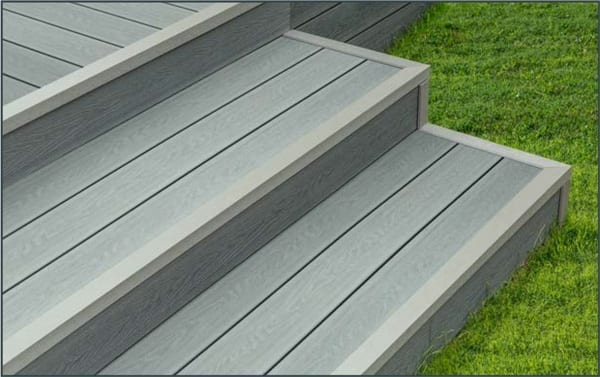
Step Framework Options
There are two main methods you can employ to install composite deck steps to your decking project: stringer and box-framed steps.
Stringer Steps
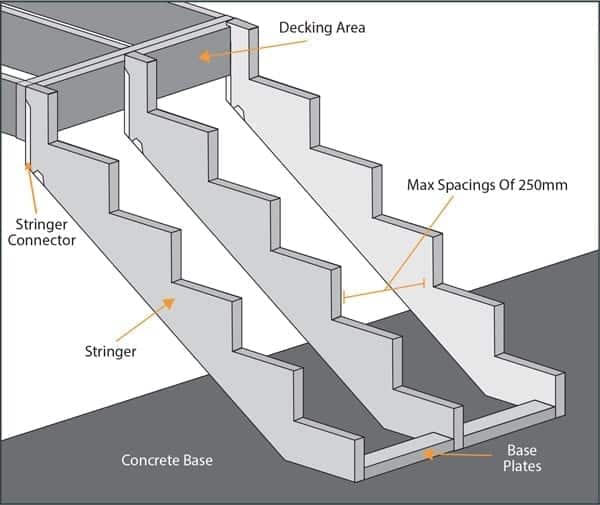
Most commonly constructed from timber, a stringer is a support that spans from a decking subframe to the base of the step area. A network of stringers form the framework of a step.
- Notches should be formed in pressure treated timber and a carpentry square and a saw should be used to form the rise and tread.
- To fix the stringer steps at the base of the steps, anchor the steps with a base plate and attach to the landing pad.
- To fix the stringer steps to your deck area, reinforce the area of the subframe behind the steps with a stair header and install a stringer connector.
Box-Framed Steps
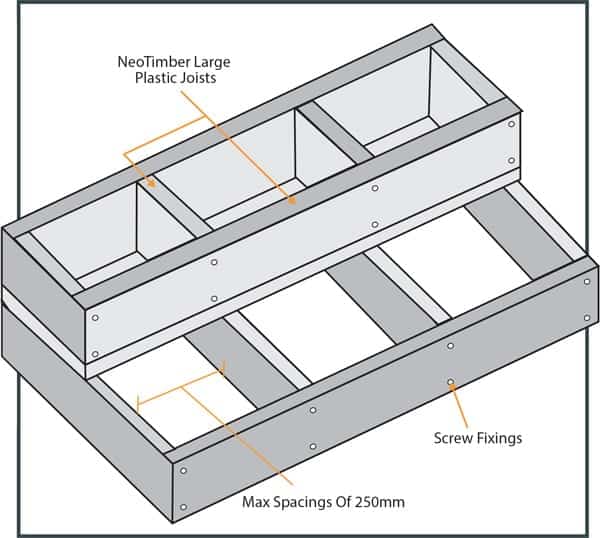
Box-framed steps are a series of boxes that are stacked on top of one another to form a run of steps.
- Form a box framework and infill with joists at 250mm spacings.
- Box-framed steps can be formed from timber, metal or NeoTimber large plastic joists.
- Secure the box-frame to the decking subframe at every intersection using appropriate fixings.
Step Fixing Options
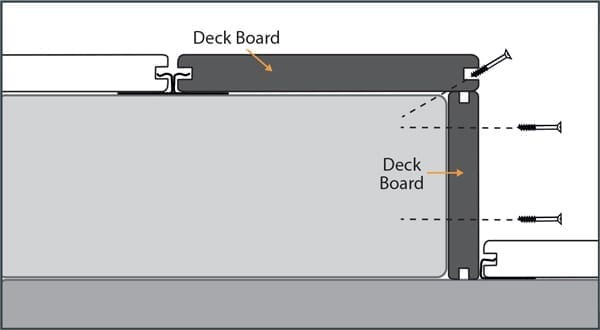
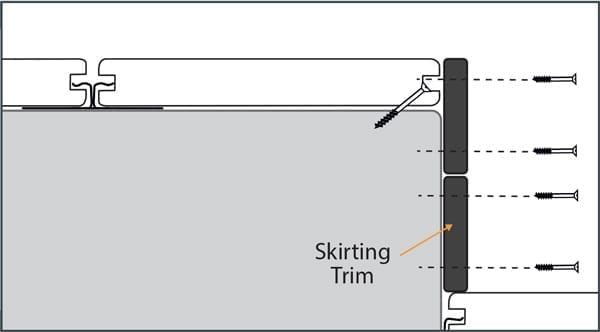
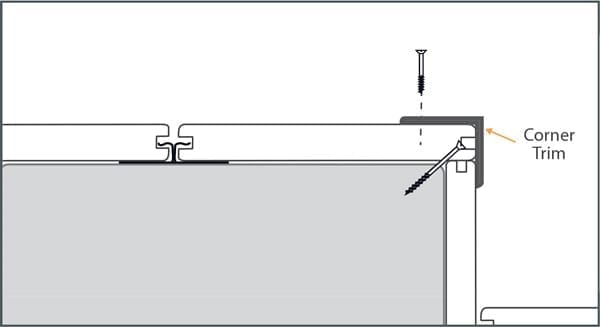
NeoTimber products can be used in a variety of ways to cover both the rise and tread of a step area. There is no "one-size-fits-all" solution when it comes to using our boards and trim products for step areas and the chosen finish often comes down to personal preference. The following provides installation advice on a variety of fixing options you have available to you – all of which offer a discrete finish for your decking step area.
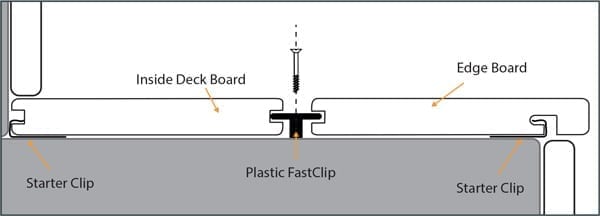
Using NeoTimber Edge Board
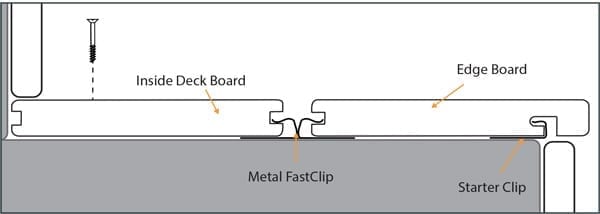
Option 1: Fix With NeoTimber Metal FastClip
When fixing the edge board with the metal FastClip, the inside deck board on the step tread must be face fixed to be secured.
Option 2: Fix With NeoTimber Plastic FastClip
When fixing the edge board with the plastic FastClip, boards can be fastened to the subframe without the need to face fix the end board – a clip can be installed in between the boards and screwed when the boards are in situ.
Using NeoTimber Deck Board
Using NeoTimber Skirting Trim
Using NeoTimber Corner Trim
How To Make Composite Garden Steps
Source: https://neotimber.com/decking/advice/installation/design-considerations/steps/
Posted by: zamoraguall1972.blogspot.com
0 Response to "How To Make Composite Garden Steps"
Post a Comment